Community Development
The Department of Statistics and Community Development (DSCD) is the reference authority in all matters related to the community development policies and plans in the Emirate of Sharjah. It is entrusted with developing and managing an integrated system for community development in cooperation with government and non-government bodies and specialized organizations. DSCD also follows up the activities, events and achievements of the establishments working in the field of community development and releases reports on that. The department aims to develop community development policies and strategies in the emirate, and to apply the best internationally approved professional and technical standards in all areas of community development, in cooperation with those governmental and non-governmental bodies and the specialized organizations. DSCD also seeks to participate in social development through the continuous monitoring of its changes and accommodating all the needs of its members, in the fields of security, social, health, cultural, economic or others. The department provides training, technical support and advice to government authorities in the field of community development and contributes to developing plans and media programs aimed at raising the community development awareness in the Emirate of Sharjah.
Spreading Statistical Culture
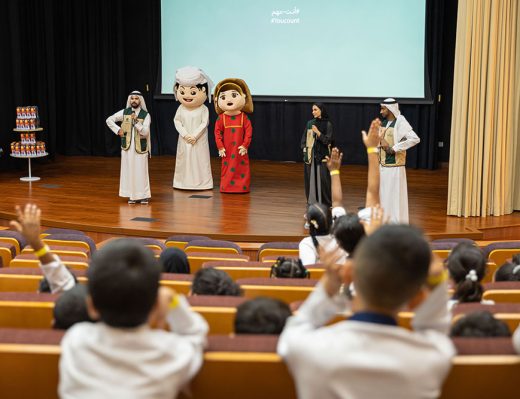
The concepts of public education and social communication with the goal at spreading the statistical culture among the community members have been established. Of course, there is a direct relationship between the levels of statistical culture and the degrees of community cooperation in giving accurate personal, economic, social, health, and demographic data swiftly to the creators of statistical studies. Accordingly, the culture of reliance on making personal and official decisions based on information, data, and evidence has developed.
The review of lessons learned from the experiences of statistical organizations around the world has established the importance of creating a statistical culture among the components of community and all economic, social, and age groups of community members. This includes the importance of educating the community components and members about the objectives of statistical study to be conducted and providing opportunity to listen to the public views before embarking on the conduction of the study. The analysis of experiences showed that if the community is educated, the populace will cooperate more than if public education was insufficient and it can be engaged in the statistical process. in addition, it was established that it is important to invest by maintaining continuous dialog between the statistical organization, stakeholders, and strategic partners for their vital role in ensuring a positive impact on the public cooperation with the study.
Standards of Living
At the directives of His Highness Sheikh Dr. Sultan bin Muhammad Al Qasimi, Member of the Supreme Council, Ruler of Sharjah, the Department of Statistics and Community Development (DSCD) undertook the Standards of Living Desk Study (SoL) from October 2017 to November 2017. The study is based on the updated stock data collected in the Sharjah Population and Housing Census of 2015. The updating of the 2015 Sharjah Census was carried out using computer-assisted telephone interviewing of household heads enumerated in 2015, or “Tahdeeth”. The data were used as a point of departure for the study’s logical framework, which resulted in a methodological framework, and the execution phases—both empirical and analytical. The objective of the SoL study is to demarcate households and individuals in Sharjah Emirate based on three distinct categories of standards of living. These are high, middle, and low standards. The aim of the study is to distinguish households with individuals who are in the lower and middle categories of standards of living. These categories will then be further studied to identify ways to improve their wellbeing. The SoL study is a desk study which determines socio-economic demographic and health characteristics alongside housing characteristics as proxy indicators to standards of living. This leads to results which show disparities between three categories: the high, the medium and the low. The study followed the DSCD’s methodology of collecting, analysing, and publishing data to make it useful for future policies. The developmental vision of His Highness the Ruler of Sharjah combines the well-being of every citizen in the Emirate, coupled with development in all its forms (human, economic, social, and political), sustainability, and the preservation of Islamic and Arab cultural heritage and identity.
The Ruler has specified and prioritized six population categories that are most vulnerable and marginalized, but this does not exclude other members of society. The six population categories include: (1) orphans, (2) widowed, divorced, and abandoned women, (3) persons with motor, mental, and sensory disabilities, (4) elderly persons, (5) illiterate and those who want to pursue their education, and (6) job seekers. The sectors involved in development include: inter alia, education, health, maternal and child care services, infrastructure, housing, the economy, social services, and security.
